

n8n gives technical teams a rare mix: visual workflows, code, self-hosting, AI nodes, and execution-based billing. The catch is that not every team wants to run infrastructure or force agentic work into a fixed node graph.
In this guide, we compare eight n8n alternatives for automation, hosted workflows, code-first orchestration, AI apps, and agent-led work.
Quick answer: Windmill suits code-first workflows. Activepieces offers visual flows and self-hosting. Dify fits AI apps and RAG. Make and Zapier remove server work. Gumloop and Oasis support shared agent work. Pipedream Workflows is closing, so it is no longer a recommendation for new deployments.
Compare the billing model before you switch
These four starting points use different billing units. Prices and allowances were checked on November 10, 2026; they are not equivalent amounts of completed work.
| Platform | Hosting | Published starting allowance | What to evaluate |
|---|---|---|---|
| n8n | Cloud; self-hosting options | Starter: €20/month billed annually, 2,500 workflow executions | Explicit steps, code and execution-based costs |
| Oasis | Hosted workspace | Free: about 2 hours of Active Work Time; Pro: $199/month, about 60 hours | Agents working with your team, with review before consequential actions |
| Gumloop | Hosted; enterprise deployment options | Pro from $37/month, 20,000 credits; 8% orchestration fee | Shared agents, reusable skills and connector controls |
| Activepieces | Cloud or self-hosted | Free: 1,000 monthly credits; Plus: $20/month, 10,000 credits | Visual flows and agents, with deployment choice |
Before migrating, run one representative task and check its bill, failed-run behavior and approval steps. Confirm which external actions need human review and what remains available if a task fails halfway through.
1. Buzz: Best for Open-Source Agent Collaboration
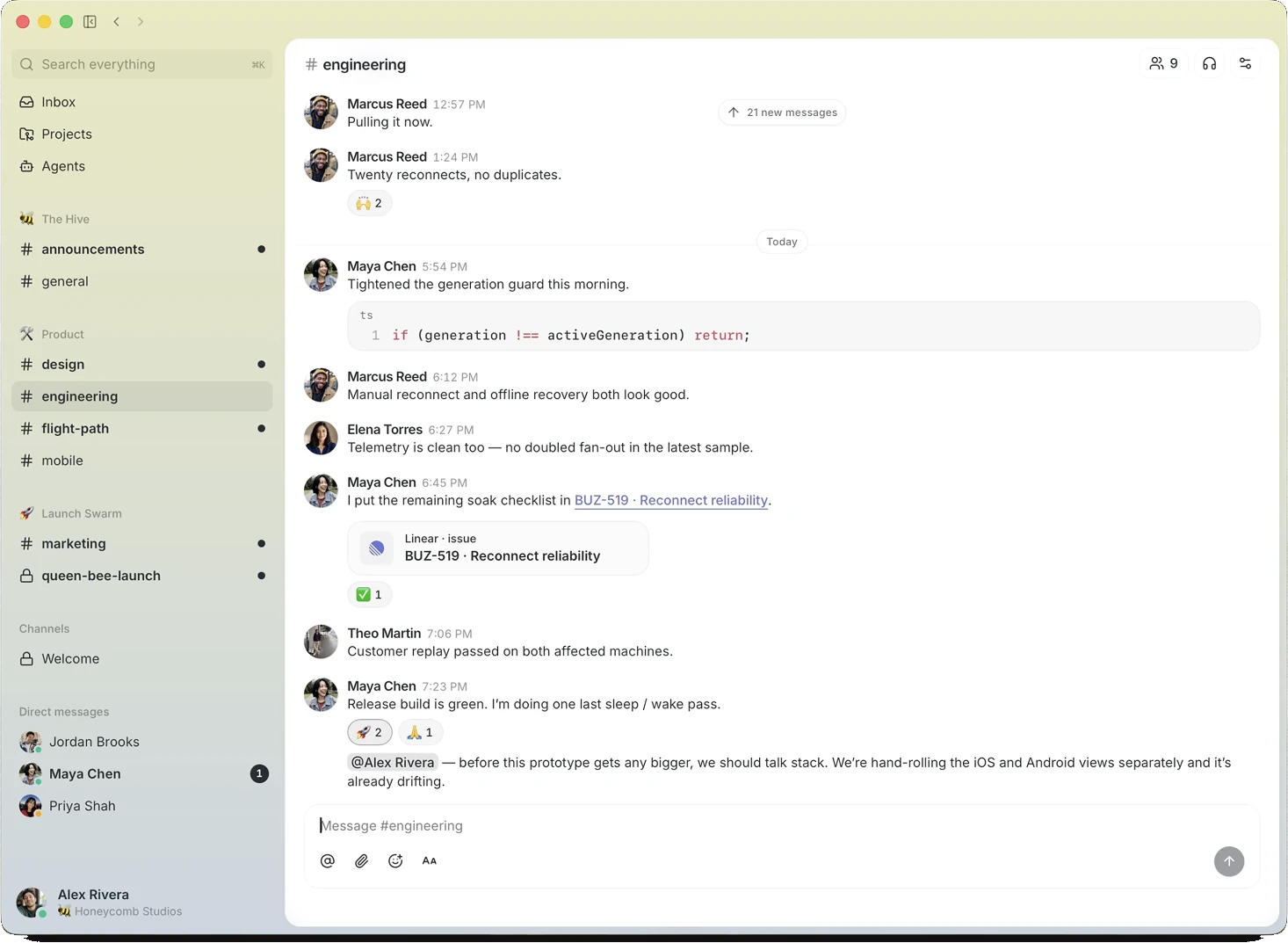
Buzz brings chat, coding agents, Git, and YAML workflows into one open-source workspace. Built by Block, it supports Claude Code, Codex, and goose, with hosted and self-hosted options. It suits teams automating engineering work, with hands-on agent configuration and workflows defined in YAML.
Best for: Developer teams that want coding agents, shared conversations, and automation in a self-hostable workspace.
| Pros | Cons |
|---|---|
| • Open source with self-hosting support • Chat, agents, and Git in one workspace | • Requires technical setup and maintenance • Git forge and workflow approval gates remain unfinished |
2. Windmill: Best for Developers
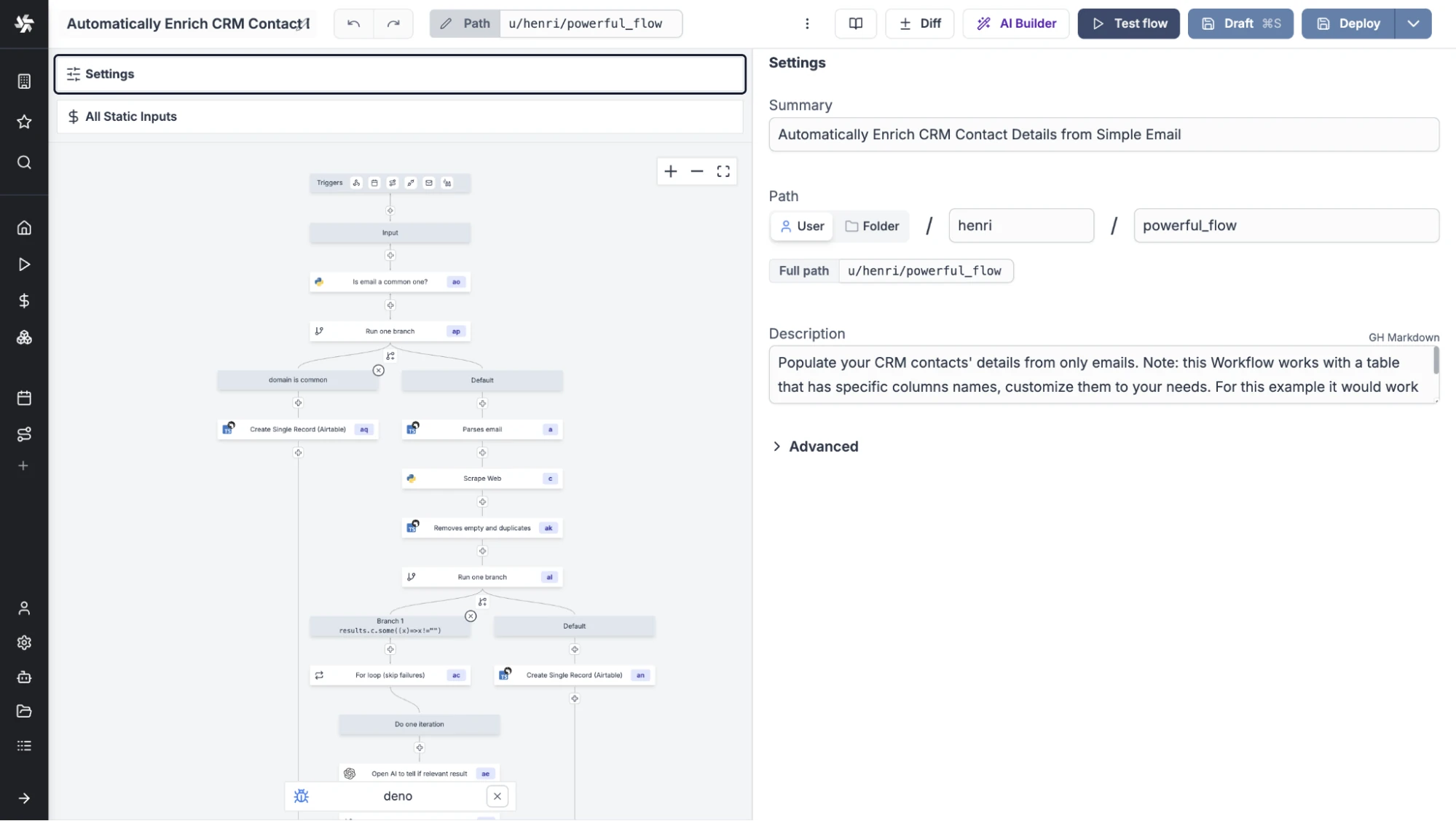
Windmill treats code as a first-class workflow step. Flows can combine Python, TypeScript, Go, Bash, SQL, approvals, branches, triggers, and AI agents. That makes it a better fit when the important logic already belongs in code.
Best for: Engineering teams automating internal systems, data jobs, APIs, and AI tasks.
| Pros | Cons |
|---|---|
| • Real code inside workflows • Strong self-hosting story | • Steeper start for non-developers • Smaller plug-and-play app ecosystem |
3. Oasis: Best for Human + Agent Workflows
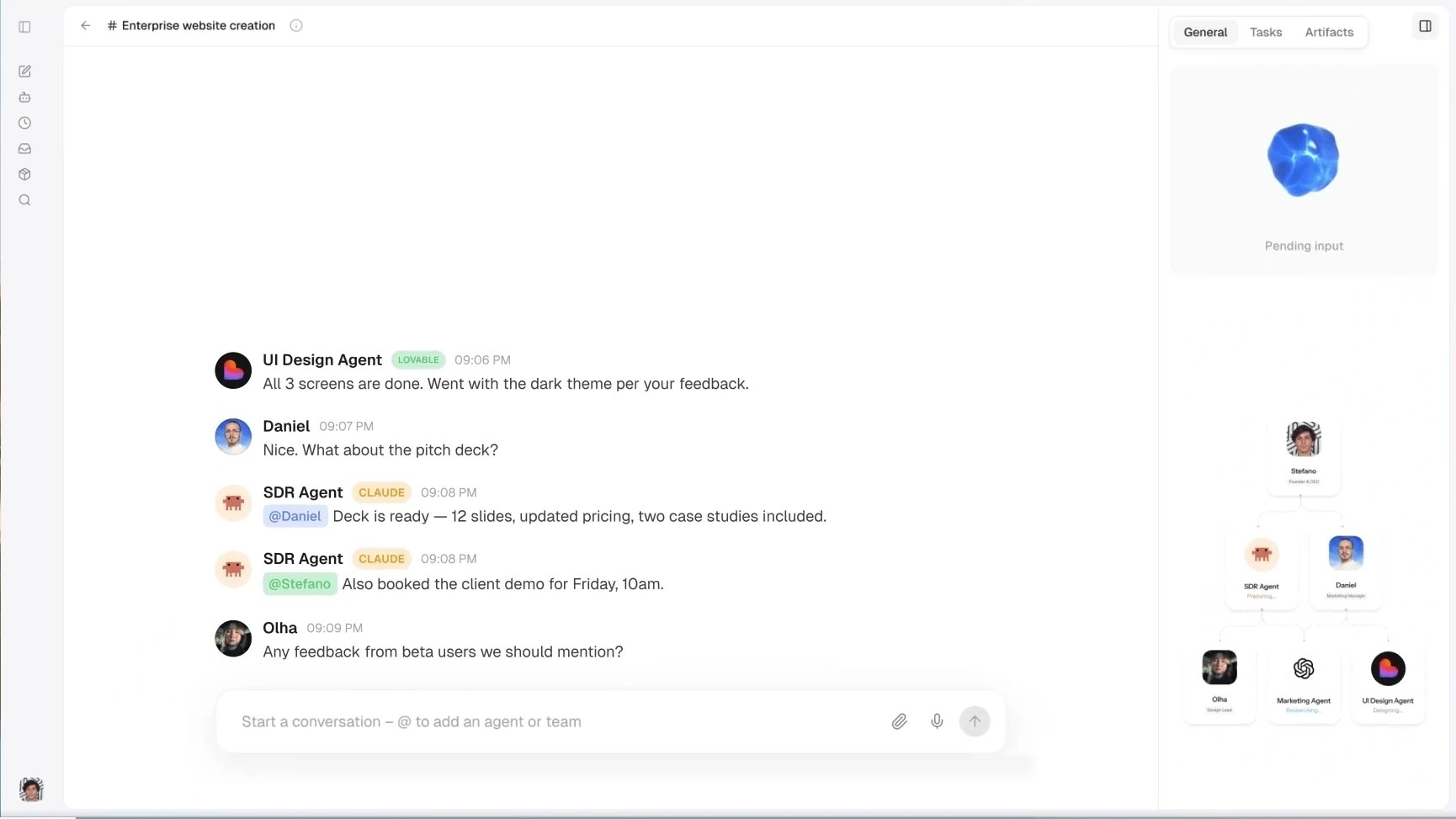
Most n8n alternatives keep the workflow canvas and change the details. Oasis changes the unit of work. People and agents share rooms, context, files, tasks, and artifacts; agents can hand work off or ask a person for approval. Scheduled rooms handle repeatable background work.
Best for: Teams where research, content, support, or operations need agent autonomy plus human judgment.
| Pros | Cons |
|---|---|
| • People and agents share context • Good fit for multi-agent handoffs | • Not a node-for-node n8n replacement • Requires an agent-first workflow model |
Try one team workflow: qualify an inbound lead
Start with the Inbound Lead Qualifier and review its listed connections and permissions. Give it your qualification criteria and one lead to assess before connecting an automated intake.
Research this company from its website and the lead details I provide. Compare it with our qualification criteria. Return pursue, nurture or pass, with the evidence for each criterion and any missing information. Draft a CRM note and a Slack summary for review. Do not change records, send messages or contact the prospect.
Check the result with your team before allowing changes to connected tools. The sales workflow page shows how research, qualification and follow-up can fit together. This is a trial brief, not a promise that every n8n flow can migrate unchanged.
4. Dify: Best for AI Apps and RAG
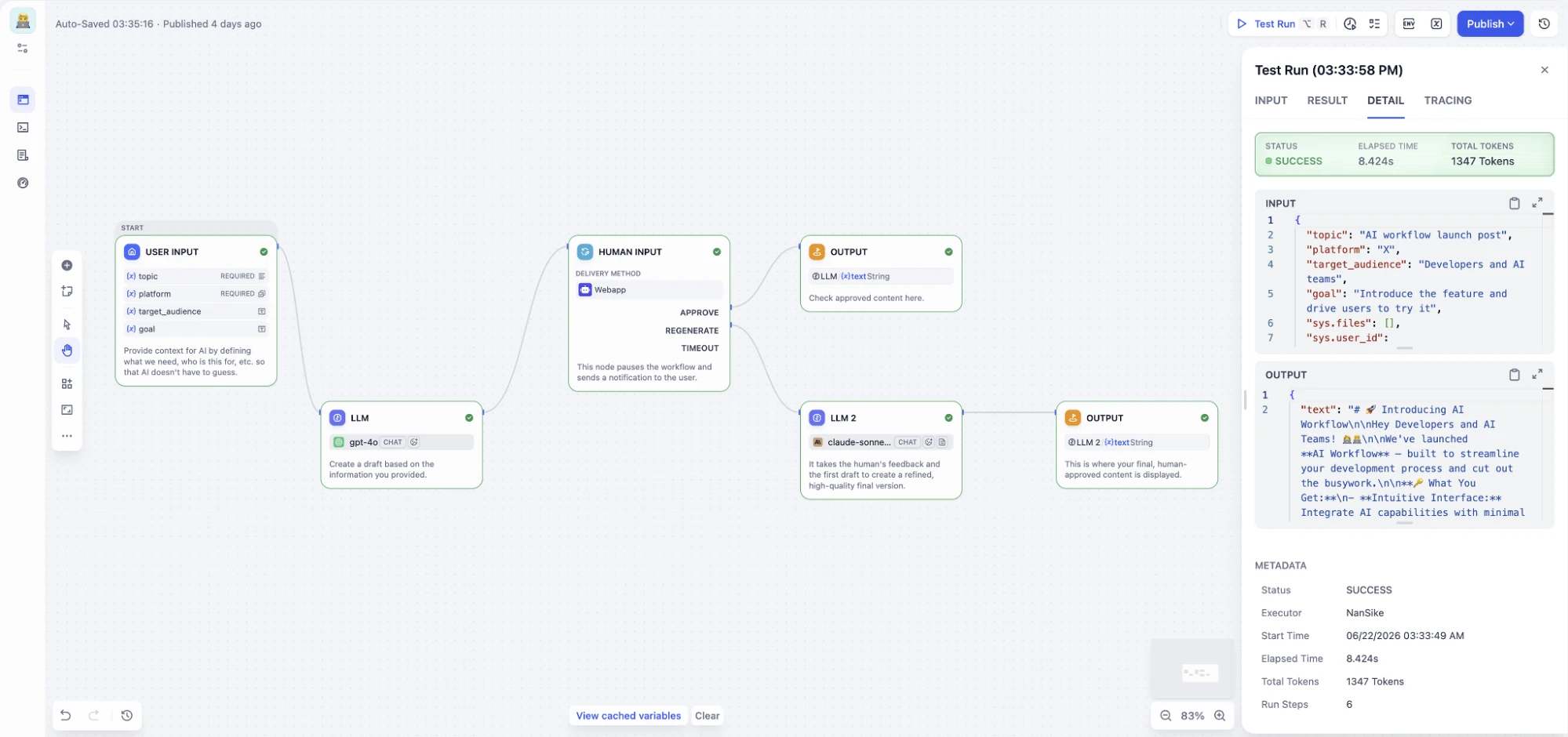
Dify is built around AI applications rather than generic app-to-app automation. Its canvas combines model calls, retrieval, tools, code, branching, triggers, MCP, and human review. It is especially useful when the workflow itself becomes an assistant, agent, or API.
Best for: RAG systems, knowledge assistants, document pipelines, and production AI workflows.
| Pros | Cons |
|---|---|
| • Strong RAG and model tooling • Human review and MCP support | • Less suited to generic SaaS automation • Model usage adds separate cost |
5. Make: Best Hosted Visual Alternative
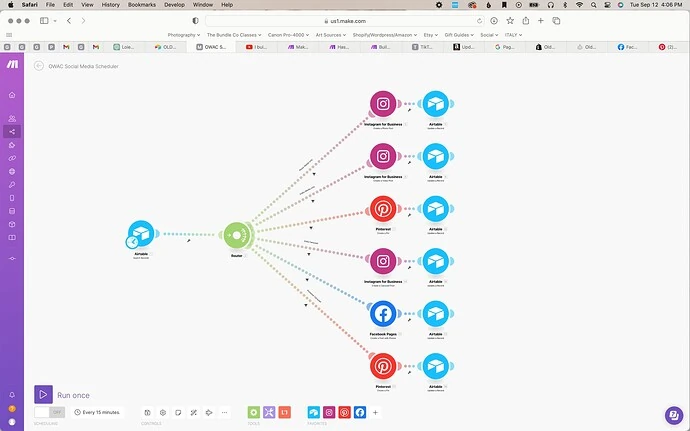
Make keeps the visual canvas but removes the server work. Scenarios show app modules and data paths clearly, which makes complex automation easier to inspect than a long linear list of steps. It is a strong middle ground between n8n flexibility and Zapier simplicity.
Best for: Business teams that want a capable visual builder without managing infrastructure.
| Pros | Cons |
|---|---|
| • Polished visual canvas • Large integration catalogue | • Cloud only • Usage credits can climb on busy scenarios |
6. Zapier: Best for App Coverage and Fast Setup
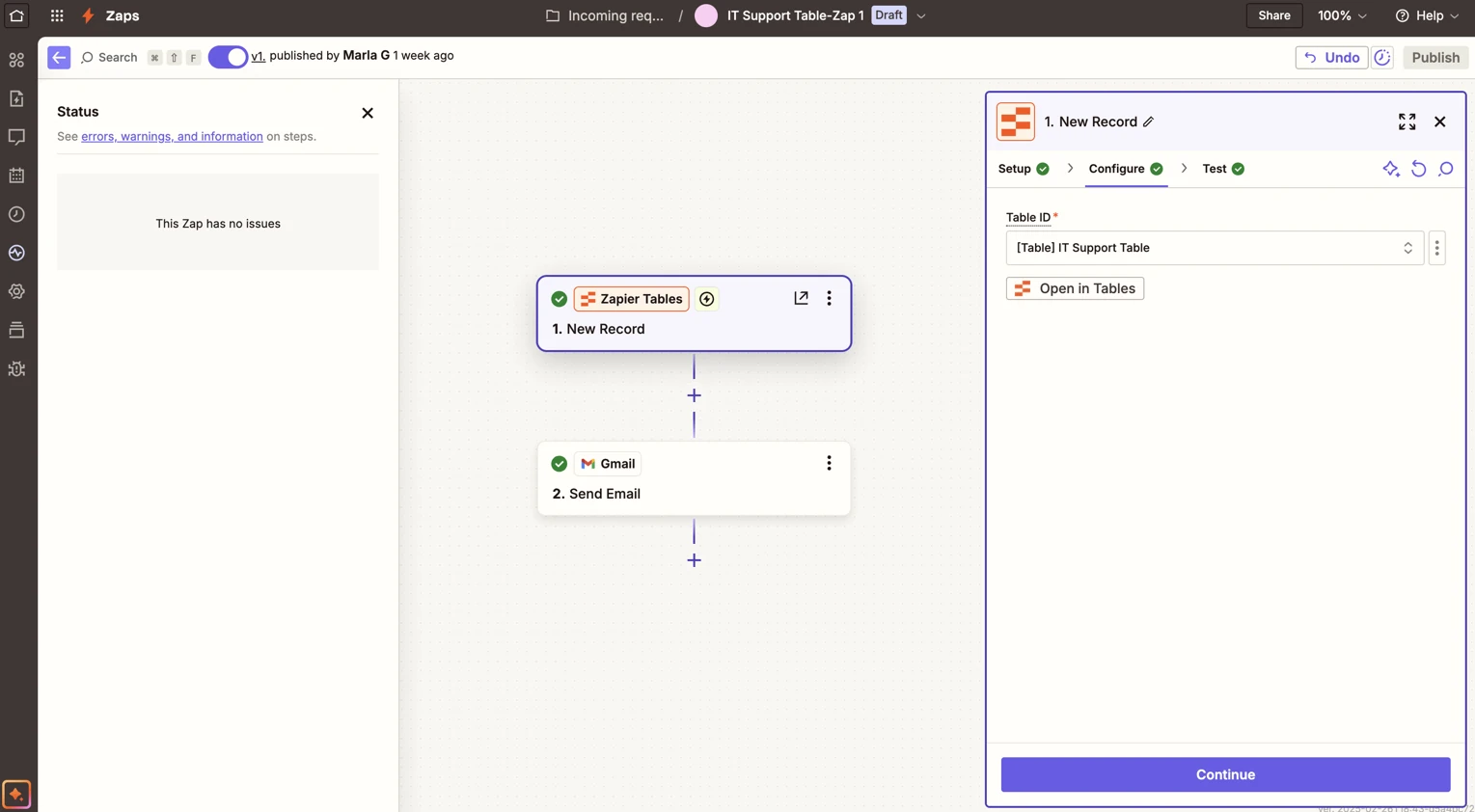
Zapier wins on convenience. Its workflow editor is easy to learn, the app catalogue is huge, and most common SaaS automations can be built quickly. The trade-off is task-based billing and less infrastructure control than n8n.
Best for: Non-technical teams that value speed and broad app coverage over self-hosting.
| Pros | Cons |
|---|---|
| • Fast setup • Very broad integration coverage | • Task-based billing gets expensive at volume • No self-hosting |
7. Gumloop: Best for Shared AI Agents
Gumloop lets teams build and share agents connected to workplace tools. Its current product includes reusable skills, company context and controls for connector access. Use it to evaluate tasks such as account research, lead qualification and support follow-through.
Best for: Business teams that want shared AI agents with connected tools and centrally managed access.
| Pros | Cons |
|---|---|
| • Shared agents, skills and workplace connectors • Controls for tool access and AI spend | • Credit usage needs a representative workload test • Enterprise controls vary by plan |
The pricing page lists Pro from $37 per month with 20,000 credits and an 8% orchestration fee, checked November 10, 2026. Check the current plan and usage terms before comparing it with an execution-based automation bill.
8. Activepieces: Best for Visual Flows with a Self-Hosting Option
Activepieces combines trigger-based flows, agents and tables. Teams can use its hosted service or run it on their own infrastructure. It is a closer starting point than an agent-only product when you still want explicit workflow steps.
Best for: Teams that want visual automation and the option to manage their own deployment.
| Pros | Cons |
|---|---|
| • Cloud and self-hosted deployment • Flows and agents can work together | • Self-hosting requires ongoing operations • Governance features and usage allowances depend on the plan |
Its pricing page lists a free plan with 1,000 monthly credits and Plus at $20 per month with 10,000 credits, checked November 10, 2026. Compare the credits consumed by your actual workload, not just the plan price.
Why Pipedream Workflows is no longer on this shortlist
Pipedream's shutdown notice says Workflows is in maintenance mode, is closed to new sign-ups and subscriptions, and will shut down on March 31, 2027. Pipedream Connect remains supported as an integration layer; it is a different product from a hosted workflow builder. Existing Workflows users should plan their migration rather than start a new deployment there.
Frequently Asked Questions
What is the closest alternative to n8n?
Activepieces. It keeps the visual workflow model and supports cloud and self-hosted deployment.
What is the best n8n alternative for developers?
Windmill for code-first orchestration. Pipedream Workflows is closed to new sign-ups and is scheduled to shut down on March 31, 2027; its separate Connect integration product remains supported.
What is the best n8n alternative for AI agents?
Oasis for collaborative agent work, Dify for AI apps and RAG, and Gumloop for AI-heavy business automation.
Can I self-host an n8n alternative?
Yes. Activepieces, Windmill, and Dify provide self-hosted options.